
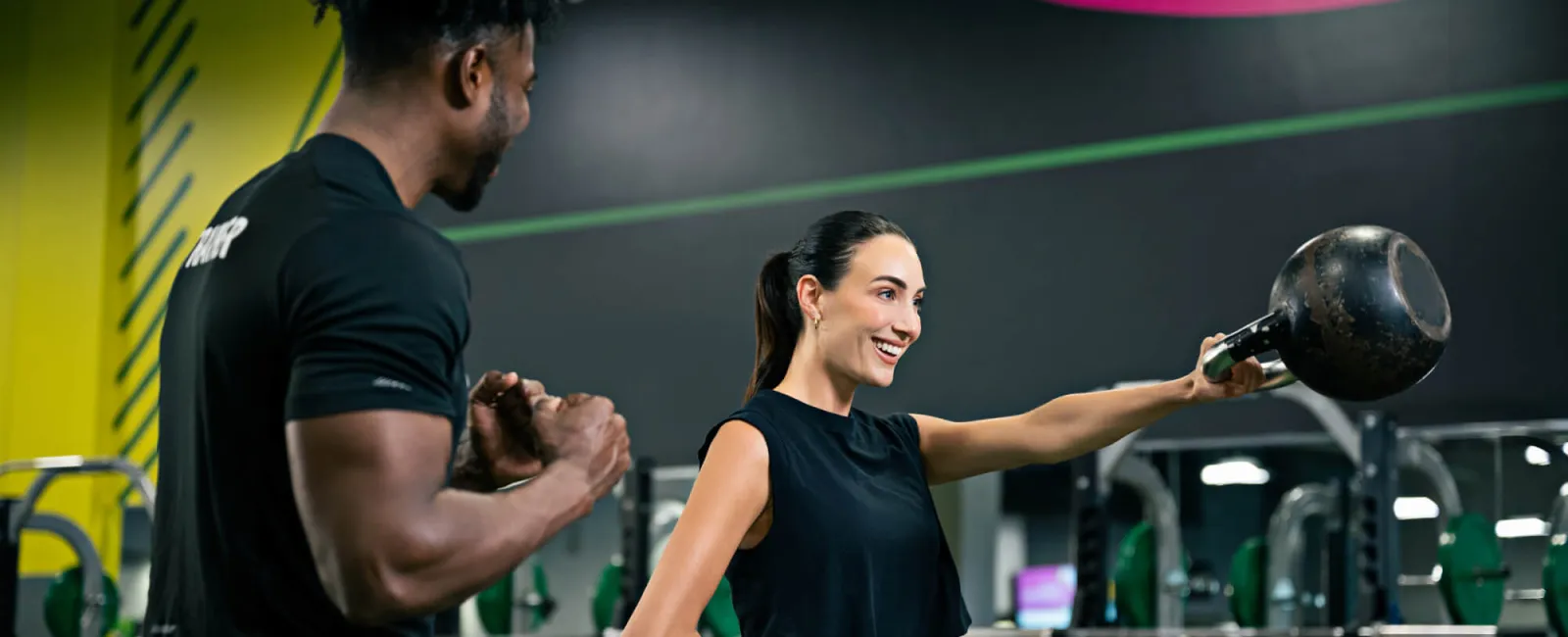
Walking into a gym for the first time is one of those things that's more intimidating in your head than it is in real life. The equipment makes sense once someone explains it. The culture is friendlier than it looks from the outside. And the version of you that's nervous about going? That person is in every gym, every day — they just got here a few weeks before you.
Here's everything you need to know before your first session.
What to Bring
Athletic shoes. Anything with a sole that supports lateral movement. Running shoes are fine. No open-toed shoes, no boots.
Comfortable workout clothes. Nothing restrictive. No jeans.
A water bottle. You can fill it at the gym, but bring one.
Headphones. Optional but highly recommended. A good playlist makes the whole thing easier.
A lock, if you plan to use the locker room.
A towel, if you plan to shower after. YouFit has showers but doesn't provide towels.
That's the complete list. You don't need special gear to start. You need shoes, something comfortable to move in, and water.
What to Expect When You Walk In
You'll check in at the front desk — your membership card, app, or key fob gets scanned. Staff will point you toward the locker rooms if you need them. From there you have the run of the gym.
The layout of most gyms follows a similar logic: cardio machines near the front or along the walls, free weights (dumbbells, barbells) in one section, resistance machines in another, a stretching or functional training area somewhere in the back or side. Group fitness studios are usually a separate room with a posted schedule outside.
If you're not sure where something is, ask. Nobody will think less of you for asking where the dumbbells are. The staff are there precisely for this.
Your First Session: Keep It Simple
The most common mistake on day one is doing too much. You arrive energized, everything looks interesting, and you spend 90 minutes trying every machine. You feel fine that night. The next two days are agony, and you don't come back for a week.
A better first session:
5-minute warm-up — walk on the treadmill at a brisk pace, or easy cycling on a stationary bike
20-25 minutes of one thing — pick one cardio machine and use it at a moderate, comfortable pace
A few basic exercises if you want to explore the weight floor — bodyweight squats, push-ups, and a dumbbell row are a complete and respectable starter set
5-minute cool-down — slow your pace, then stretch for 2-3 minutes
Total time: 35-40 minutes. That's a real workout. Leave feeling like you could come back tomorrow — because you should.
The Equipment, Briefly Explained
Cardio machines
Treadmill: Walking or running on a moving belt. Set your speed with the arrows, adjust incline if you want a challenge, and use the safety clip (the magnetic clip that attaches to your shirt) — it stops the belt if you fall. Elliptical: Low-impact stepping motion. Great for beginners or anyone with joint issues. Stationary bike: Seated cycling. Upright or recumbent (the one with the back support). Rowing machine: Legs push, then you pull the handle to your lower chest. Most people get the form slightly wrong at first — it's worth asking a trainer to show you once.
Free weights
Dumbbells are the two-handed weights in a rack, organized by weight from light to heavy. Pick them up, use them, put them back where you found them — this last part is gym etiquette 101. Barbells are the long bars used for bench press, squats, and deadlifts. Start with dumbbells until you're comfortable with the basic movement patterns.
Resistance machines
These are the cable and weight-stack machines that guide your movement through a fixed range of motion. They're often more beginner-friendly than free weights because the movement path is controlled. Each machine has an adjustment pin for the weight and usually a diagram showing which muscles it works and how to position your body.
Gym Etiquette: The Short Version
Wipe down equipment after you use it. Spray bottles and paper towels are available throughout the gym.
Re-rack your weights. Put dumbbells back in their spot. Remove weight plates from barbells after your set.
Don't occupy equipment when you're not actively using it. If you're checking your phone for three minutes between sets, that's fine. Ten minutes of sitting on a machine while scrolling is not.
Headphones signal "I'm in my zone." If someone has them in, they probably don't want to chat.
Ask before working in. If someone's using a machine, you can ask "can I work in between your sets?" It's common and nobody minds.
Your Free Fitness Assessment
Every new YouFit member gets a free fitness assessment with a certified trainer. It's not a sales pitch. A trainer will talk through your goals, assess how you move, and build you a starting workout plan tailored to where you are right now. If you're new to the gym, book this before or right after your first session — it takes the guesswork out of what to do and means you'll walk in next time with a plan.
Ask at the front desk to schedule it. It takes about 30-45 minutes and changes the trajectory of how quickly you progress.
The Most Important Thing
Come back. The first session is about showing up and not hating it. The second session is about reinforcing that you can do this. By the fifth or sixth session, it starts to feel normal. By the tenth, you'll have a routine.
Nothing in a gym is as complicated as it looks from the outside. You'll figure it out faster than you expect.
The first week at a new gym is the hardest one. Not because of the workouts — because of the uncertainty. Where do I go? What do I do? Will I look like I don't know what I'm doing? (You might. That's fine. Everyone did at first.)
Here's a simple day-by-day plan for your first week.
Before Day One: The Setup
Do two things before your first session. First, download the YouFit app. You can use it to check in, view the class schedule, and manage your membership from day one. Second, schedule your free fitness assessment — call or ask at the front desk. You can do it during your first visit or book it for a separate day. Either works, but don't skip it. A trainer will build you a personalized starting plan, which means you'll never have to walk in and wonder what to do next.
Day One: Orientation
Keep this session short and exploratory. Twenty-five to thirty minutes, no more.
Walk the floor before you start. Find the cardio machines, the free weights, the resistance machines, the stretching area, and the group fitness studio. Note where the spray bottles are (you'll use these to wipe down equipment) and where the water fountain or filling station is.
Then pick one cardio machine — whichever one seems least intimidating — and spend 20 minutes on it at a comfortable pace. Stretch for five minutes. Go home.
That's it. You came, you saw, you didn't make it weird. Day one is done.
Day Two: Rest (Or Active Recovery)
You don't need to go to the gym every day, especially in week one. Your body is adjusting to new movement patterns and possibly some muscle soreness. A rest day or a light walk outside is the right call.
If you're feeling fine and want to move, a 20-minute walk — outdoors or on a treadmill — is perfect. Not a second workout. A walk.
Day Three: Your First Real Session
This is where you start to build a routine. Use this structure:
5-minute warm-up on any cardio machine
20-25 minutes of cardio — try a different machine than day one if you want, or stick with the same one
10-15 minutes on the weight floor — three basic exercises:
Goblet squat with a light dumbbell: 3 sets of 10
Dumbbell row (one hand on a bench, pull weight to hip): 3 sets of 10 each side
Push-ups (on your knees if needed): 3 sets of as many as you can do with good form
5-minute stretch — hips, hamstrings, shoulders
Total time: 45-50 minutes. You've now done cardio and strength in the same session, which is exactly the kind of balanced workout that produces results.
Day Four: Rest
Take it. Muscle is built during recovery, not during the workout. Skipping rest days doesn't make you progress faster — it makes you sore longer and increases injury risk. Two rest days between sessions in week one is correct.
Day Five: Try Something New
Check the class schedule and consider walking into a group fitness class — BODYPUMP, Zumba, BODY BALANCE, or whichever one's running at a time that works for you. You don't have to be good at it. Show up, follow along as best you can, and see what it feels like.
Alternatively: repeat day three's workout with slightly more weight on the dumbbell exercises. Track what weights you used. This is the beginning of progressive overload, which is how you keep getting stronger over time.
Day Six and Seven: Rest
End the week with two rest days. Reflect on how three gym sessions in one week feels. For most people, it feels better than they expected.
What Week Two Looks Like
Same structure: three sessions, rest days in between. Use the same workout from day three, but try to add a little weight or a few more reps somewhere. By week two you should also have completed your fitness assessment — if you haven't, this is the week to do it.
The gym becomes familiar faster than you'd expect. By week three, you'll have a favorite machine, a sense of which times are busier, and best of all: the beginning of a real habit.
